
South American fruit farms face unique challenges that demand specialized equipment solutions. From the steep terrains of Chilean apple orchards to the humid conditions of Brazilian citrus groves, having the right orchard tractor can dramatically impact productivity and profitability. This comprehensive guide explores tractor solutions specifically engineered for South American fruit farming operations, helping you make informed decisions that address your farm’s specific needs.
Unique Challenges of South American Fruit Farming

South American fruit farms operate in diverse and often challenging environments that require specialized equipment solutions. Understanding these unique challenges is essential for selecting the right orchard tractor for your operation.
Varied Terrain Conditions
From the steep hillsides of Chile’s central valley to the terraced orchards of Peru, South American fruit farms often operate on challenging slopes. Standard agricultural tractors struggle with stability and maneuverability in these conditions, creating safety risks and reducing operational efficiency.
Diverse Climate Zones
South America encompasses multiple climate zones, from tropical regions in Brazil to arid areas in Argentina. Equipment must withstand high humidity, intense heat, seasonal heavy rainfall, and in some regions, significant temperature fluctuations that can impact mechanical performance.
Narrow Row Spacing
Many South American fruit orchards feature densely planted trees with narrow row spacing to maximize land use. Standard tractors are often too wide to navigate these tight spaces without damaging valuable fruit trees and reducing yields.
Infrastructure Limitations
Limited access to parts, service facilities, and technical support in rural areas creates additional challenges. Tractors that require frequent specialized maintenance or proprietary components can lead to costly downtime during critical growing seasons.
Need Help Identifying Your Farm’s Specific Challenges?
Our agricultural equipment specialists can analyze your unique operating conditions and recommend tailored solutions for your South American fruit farm.
Essential Features for South American Orchard Tractors

Successful orchard operations in South America require tractors with specific features designed to address regional challenges. These key characteristics separate specialized orchard tractors from standard agricultural equipment.
Compact Design
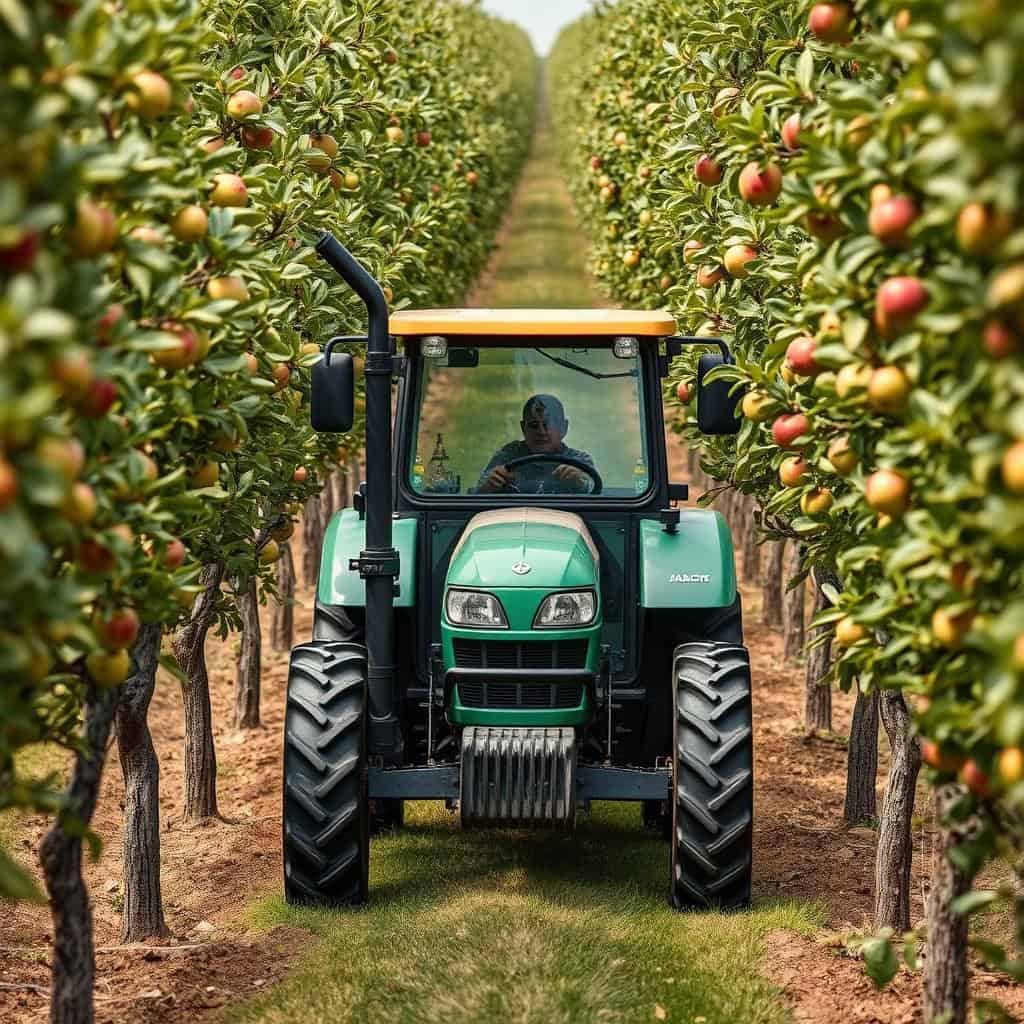
Narrow width (typically 1.0-1.5m) allows navigation between tight orchard rows without damaging trees or fruit. Low-profile designs with tapered cabs prevent branch and fruit damage while maintaining operator comfort.
Specialized Power Systems
Engines ranging from 70-120 HP provide sufficient power while maintaining fuel efficiency. Advanced cooling systems prevent overheating in tropical regions, while high-torque capabilities handle steep terrain common in Andean fruit regions.

Terrain Adaptability
Four-wheel drive systems with differential lock provide stability on varied terrain. Specialized suspension systems absorb shocks on uneven ground, while high ground clearance prevents undercarriage damage on rocky soil.

Operator Protection
Climate-controlled cabs with advanced filtration systems protect operators from spray chemicals and extreme weather. ROPS (Roll Over Protection Systems) provide essential safety on steep terrain, while reinforced cabs protect against falling branches.

Hydraulic Systems
Multiple hydraulic outlets support various implements required for orchard management. Precision hydraulic controls enable delicate operations like pruning and harvesting, while high-capacity systems power demanding attachments.

Specialized Wheels
Narrow profile tires minimize soil compaction in sensitive root zones. Specialized tread patterns provide traction on both wet and dry surfaces, while adjustable wheel spacing accommodates different row configurations.

Discover the Right Features for Your Orchard
Download our comprehensive guide to orchard tractor features specifically selected for South American fruit farming conditions.
Top Orchard Tractor Models for South American Conditions
After extensive testing and farmer feedback across various South American regions, these tractor models have proven particularly effective for fruit farming operations. Each offers distinct advantages depending on your specific orchard requirements.
| Model | Power Range | Best For | Key Features | Ideal Regions |
| New Holland Frutteto CVT | 90-115 HP | Premium fruit operations | Continuously variable transmission, advanced hydraulics | Chile, Argentina |
| CASE IH Farmall 120N | 110-120 HP | Narrow row orchards | Ultra-narrow design, high power density | Brazil, Peru |
| McCormick X4F | 70-112 HP | Small to medium orchards | Compact design, excellent maneuverability | Colombia, Ecuador |
| SAME Frutteto S/V | 80-115 HP | Varied terrain | Specialized suspension, terrain adaptability | Chile, Argentina |
| John Deere 5GF | 75-105 HP | Tropical conditions | Enhanced cooling, humidity resistance | Brazil, Colombia |
Model Spotlight: New Holland Frutteto CVT
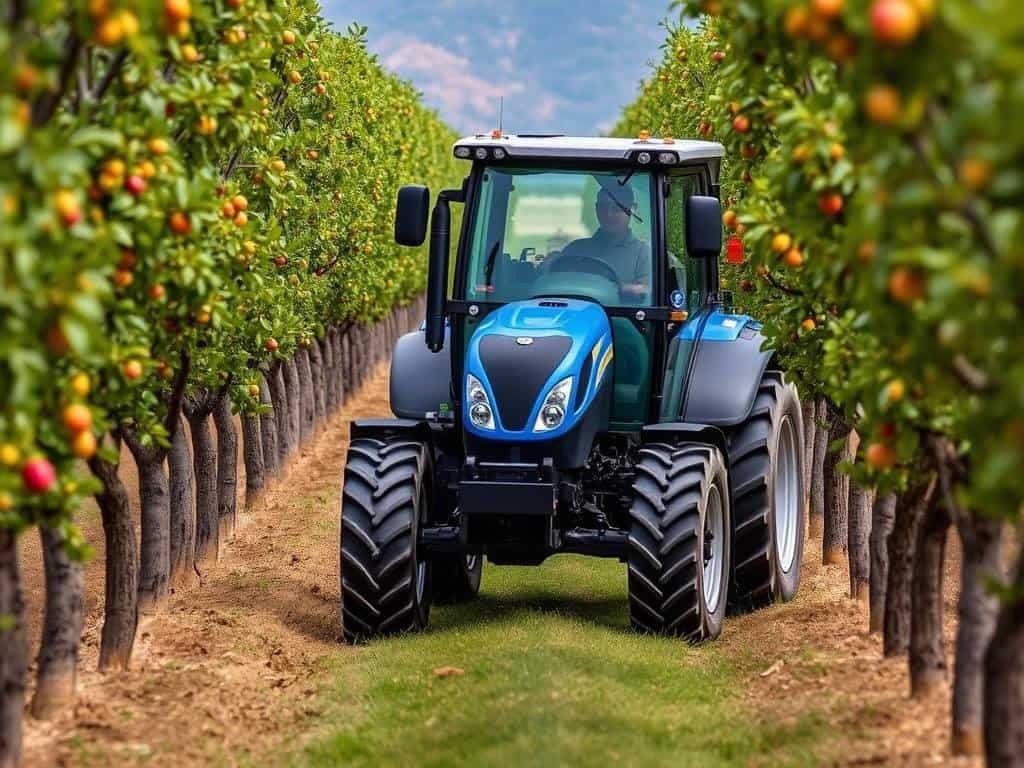
The New Holland Frutteto CVT has become increasingly popular in Chilean and Argentinian fruit operations due to its advanced continuously variable transmission that provides seamless power delivery on varied terrain. Its climate-controlled cab with Category 4 filtration protects operators during spraying operations, while the precision hydraulic system supports multiple implements simultaneously.
Advantages
- Stepless CVT transmission ideal for precision orchard work
- Advanced hydraulics with up to 100 L/min flow capacity
- Superior operator protection with Category 4 filtration
- Available in multiple width configurations (V, N, F models)
Limitations
- Higher initial investment than mechanical transmission models
- Requires specialized service technicians
- Limited dealer network in some South American regions
Model Spotlight: CASE IH Farmall 120N
The CASE IH Farmall 120N has proven exceptionally effective in Brazilian and Peruvian fruit operations where ultra-narrow row spacing is common. Its powerful engine delivers 120 HP in a compact frame that can navigate rows as narrow as 1.0 meter without compromising stability or performance.
Advantages
- Ultra-narrow design (starting at 1.0m width)
- High power-to-weight ratio for steep terrain
- Reinforced Fruit Cab with ROPS protection
- Excellent parts availability throughout South America
Limitations
- Less comfortable on longer operation days
- Limited hydraulic options compared to premium models
- Higher fuel consumption under heavy loads

Find Your Ideal Orchard Tractor Model
Our equipment specialists can help you identify the perfect tractor model for your specific South American fruit farming operation.
Specialized Attachments for South American Fruit Operations
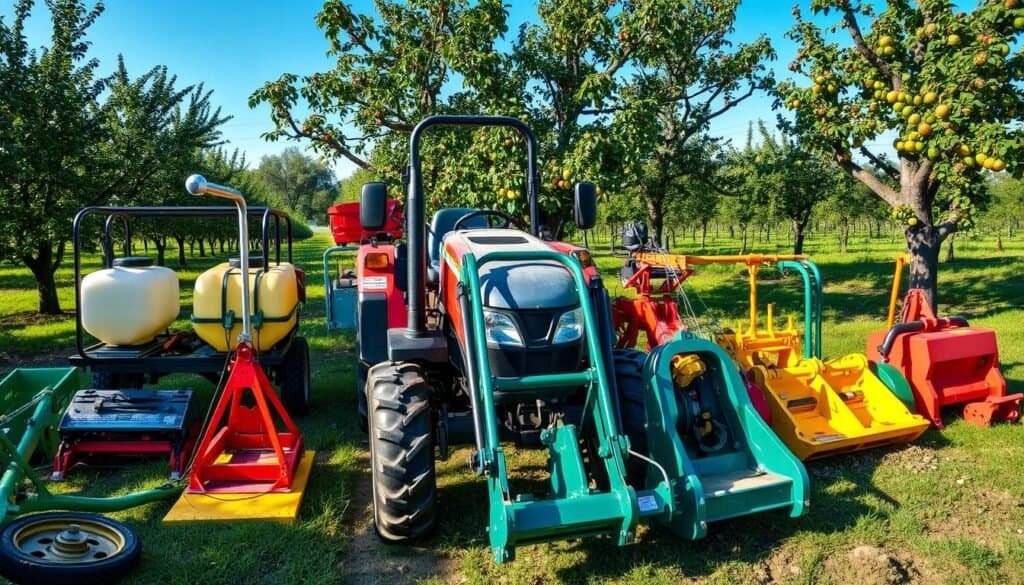
The versatility of orchard tractors comes from their ability to work with specialized implements designed for fruit farming operations. These attachments significantly enhance productivity and efficiency in South American orchards.
Precision Spraying Systems
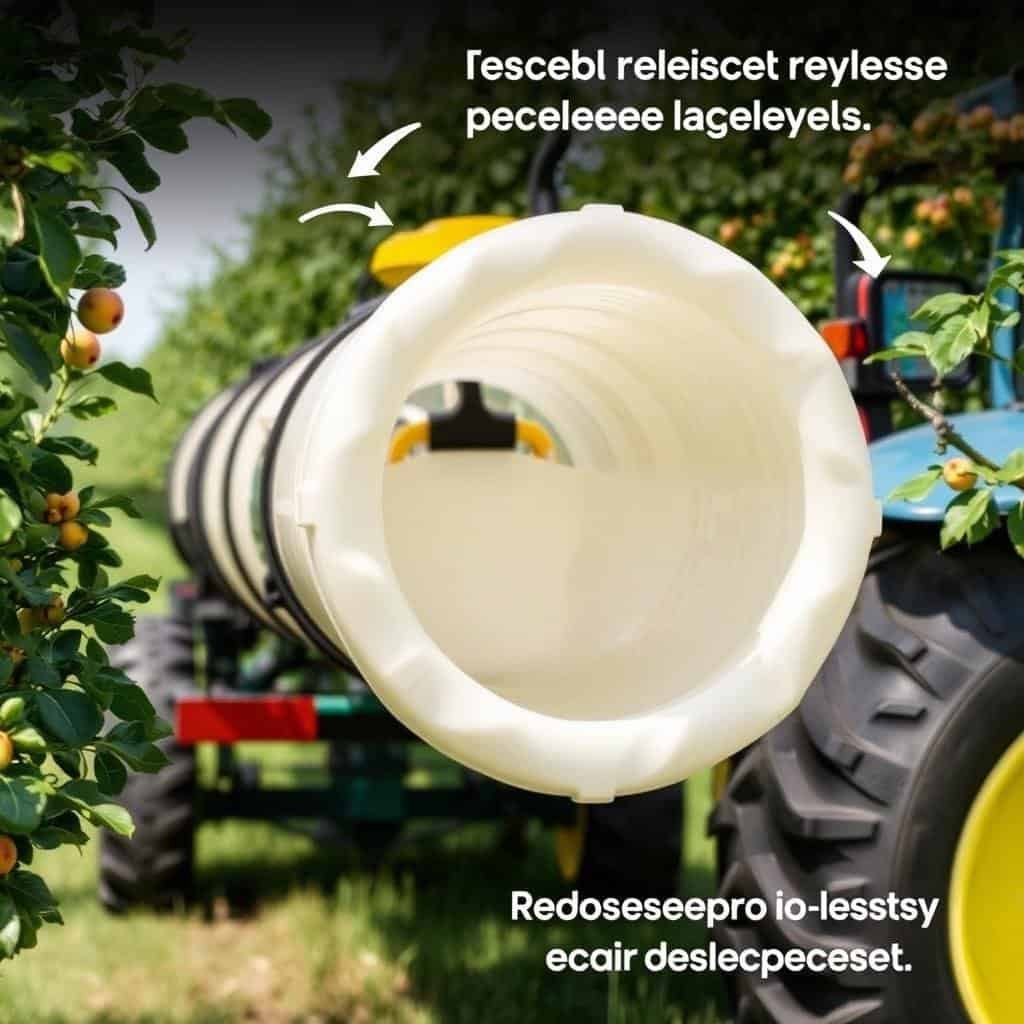
Advanced orchard sprayers with sensor-controlled application reduce chemical usage by up to 30% while improving coverage. Tunnel sprayers capture and recycle excess spray, particularly valuable in environmentally sensitive regions of Chile and Colombia.
Pruning Equipment
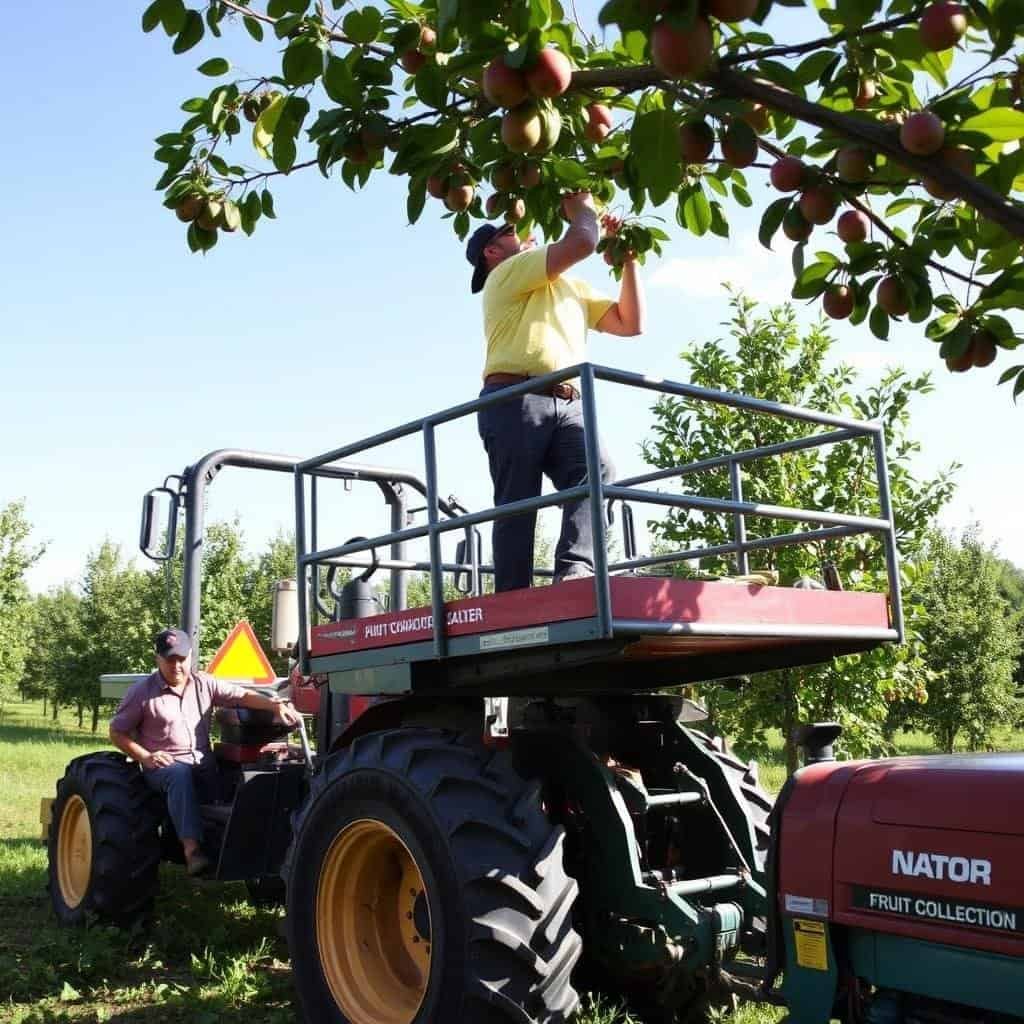
Hydraulic pruning platforms elevate workers safely for manual pruning operations. Mechanical pruning attachments with precision cutting blades maintain uniform tree shapes in large commercial orchards throughout Argentina and Brazil.

Harvesting Aids
Fruit collection platforms reduce labor requirements and physical strain during harvest. Mechanical harvesters with gentle collection systems minimize fruit damage in appropriate crops like certain citrus varieties common in Brazilian orchards.
Soil Management Tools
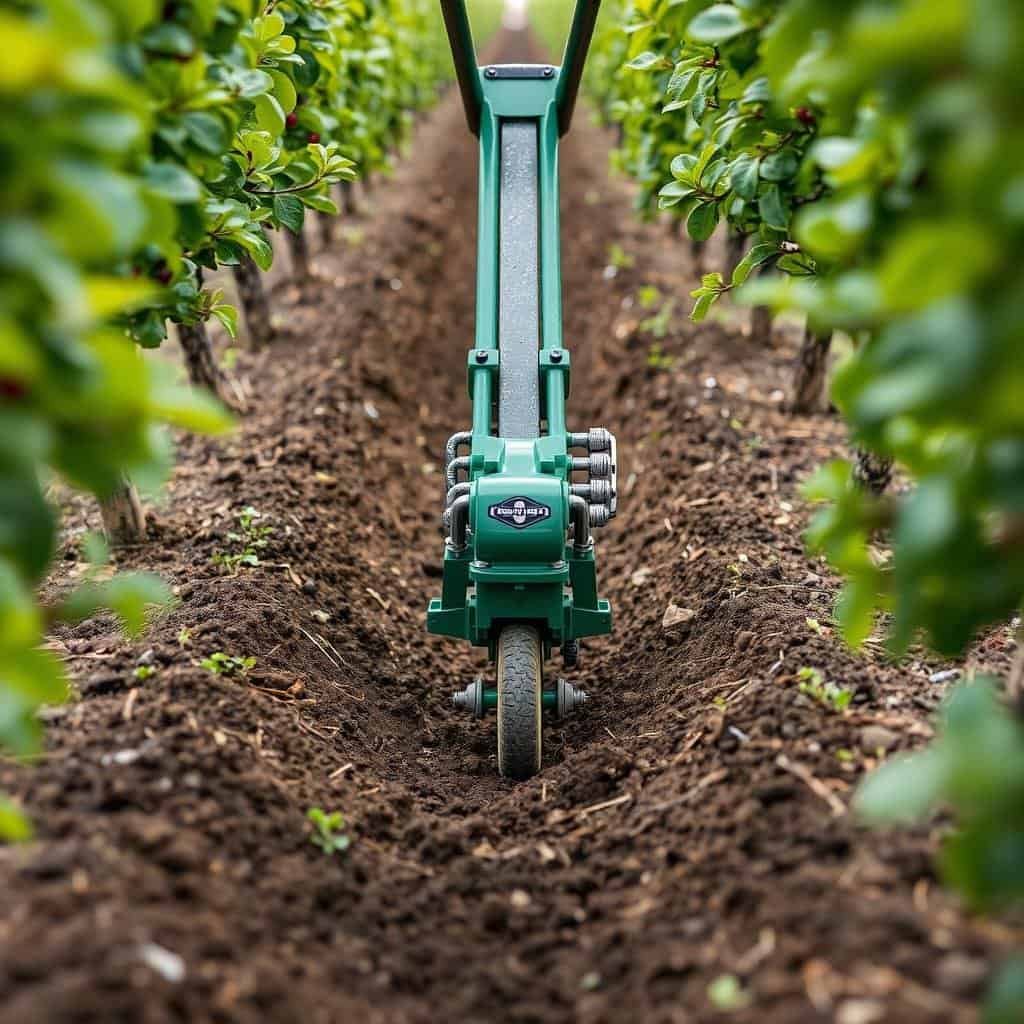
Specialized narrow cultivators maintain soil health between tight orchard rows. Precision fertilizer applicators ensure nutrients reach root zones efficiently, particularly important in the varied soil conditions found across South American growing regions.
Orchard Floor Management
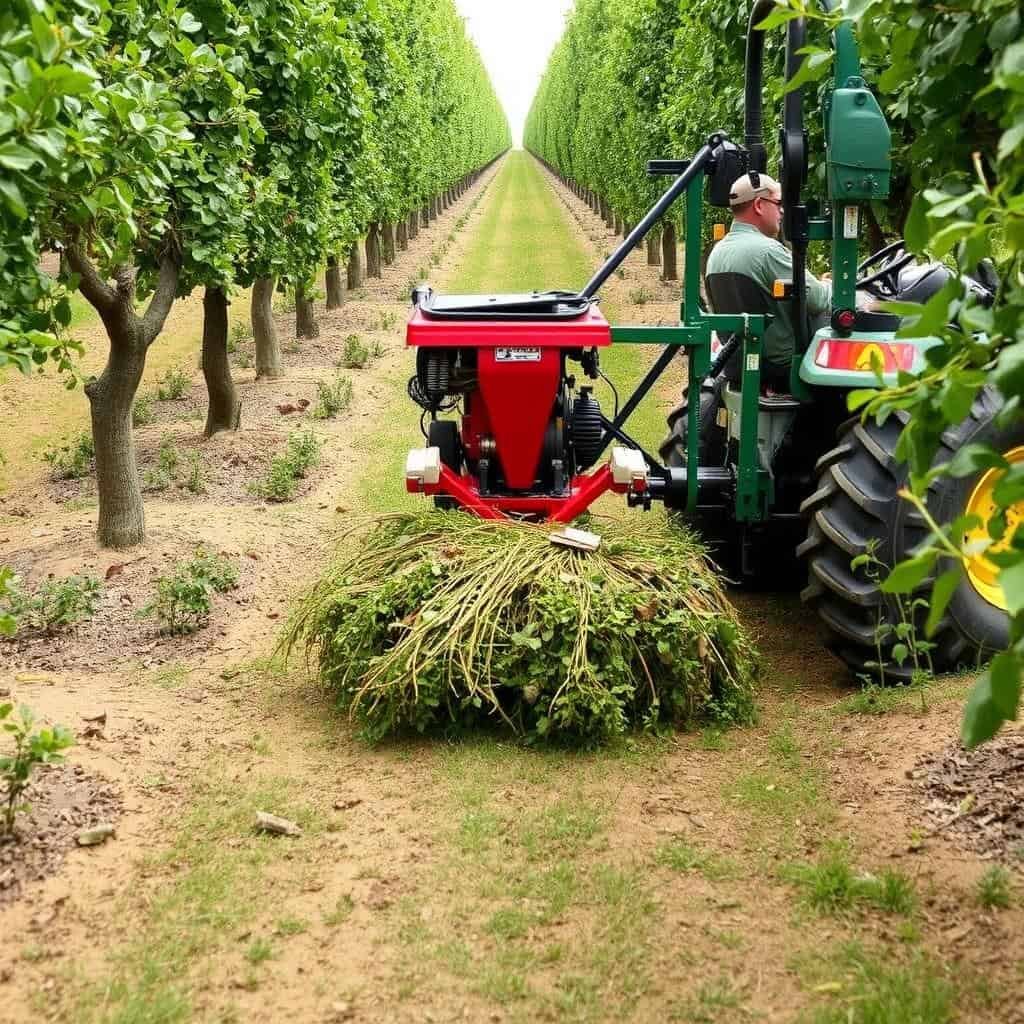
Mulchers and mowers designed for orchard environments control undergrowth without tree damage. Specialized sweepers collect fallen fruit to reduce pest pressure, a critical practice in organic operations throughout Peru and Chile.
Transport Solutions
Narrow orchard trailers navigate tight spaces while safely transporting harvested fruit. Bin carriers minimize fruit damage during transport from orchard to packing facilities, essential for maintaining export quality in premium Chilean and Argentinian operations.

Enhance Your Orchard Operations
Explore our catalog of specialized attachments designed specifically for South American fruit farming conditions.
Maintenance Considerations for Tropical and Varied Climates

South America’s diverse climate zones present unique maintenance challenges for orchard tractors. Implementing region-specific maintenance protocols significantly extends equipment life and reduces costly downtime.
Tropical Region Maintenance
In humid tropical regions like parts of Brazil and Colombia, preventing moisture-related damage is critical. Daily inspection of electrical components and connections helps identify early signs of corrosion. More frequent air filter replacement (every 100-150 hours versus standard 200-250 hours) prevents engine damage from high dust and humidity levels.
Cooling system maintenance becomes particularly important, with radiator cleaning recommended weekly rather than monthly. Using tropical-grade lubricants with higher viscosity ratings maintains proper protection in high-temperature operations common in these regions.
Arid Region Considerations
In drier regions like parts of Chile and Argentina, dust protection becomes the primary concern. Enhanced air filtration systems with pre-cleaners are strongly recommended, along with daily inspection and cleaning of air intake components. Sealed bearings and protected grease points prevent premature wear from fine dust particles.
Hydraulic system protection requires special attention, with more frequent hydraulic filter changes (every 300 hours versus standard 500 hours) and careful monitoring of fluid cleanliness. Using specialized dust seals on critical components extends service life in these challenging conditions.
Preventative Maintenance Schedule for South American Conditions
| Maintenance Task | Standard Interval | Tropical Regions | Arid Regions | Critical Components |
| Engine Oil Change | 250 hours | 200 hours | 250 hours | Use correct viscosity for region |
| Air Filter Inspection | 50 hours | 25 hours | Daily | Pre-cleaner, main element |
| Hydraulic Filter | 500 hours | 400 hours | 300 hours | Return filter, pressure filter |
| Cooling System | Monthly cleaning | Weekly cleaning | Bi-weekly cleaning | Radiator, oil cooler |
| Electrical System | 100 hours | 50 hours | 100 hours | Connections, battery terminals |
Optimize Your Maintenance Program
Download our region-specific maintenance guide for orchard tractors operating in South American environments.
ROI Analysis: Investing in Specialized Orchard Equipment

Investing in specialized orchard tractors represents a significant capital expenditure for South American fruit operations. Understanding the true return on investment helps farm managers make informed purchasing decisions based on their specific operational needs.
Initial Investment Comparison
Specialized orchard tractors typically command a 15-30% premium over standard agricultural tractors of similar power ratings. For example, a 90 HP standard tractor might cost $45,000-55,000 USD, while a comparable orchard-specific model ranges from $60,000-75,000 USD depending on features and specifications.
This premium reflects the specialized design elements, reinforced components, and orchard-specific features that standard agricultural tractors lack. When evaluating this higher initial cost, it’s essential to consider the full operational lifecycle and productivity benefits.
Operational Cost Benefits
Field studies across multiple South American fruit operations demonstrate that specialized orchard tractors typically reduce operational costs in several key areas. Fuel efficiency improvements of 10-15% result from right-sized engines and transmissions designed specifically for orchard work patterns.
Labor productivity increases of 15-25% come from better maneuverability, improved operator comfort, and purpose-built features that streamline orchard tasks. Additionally, specialized tractors reduce crop damage by 20-30% compared to adapted standard tractors, directly impacting marketable yield and quality.
Case Study: Chilean Apple Orchard ROI Analysis
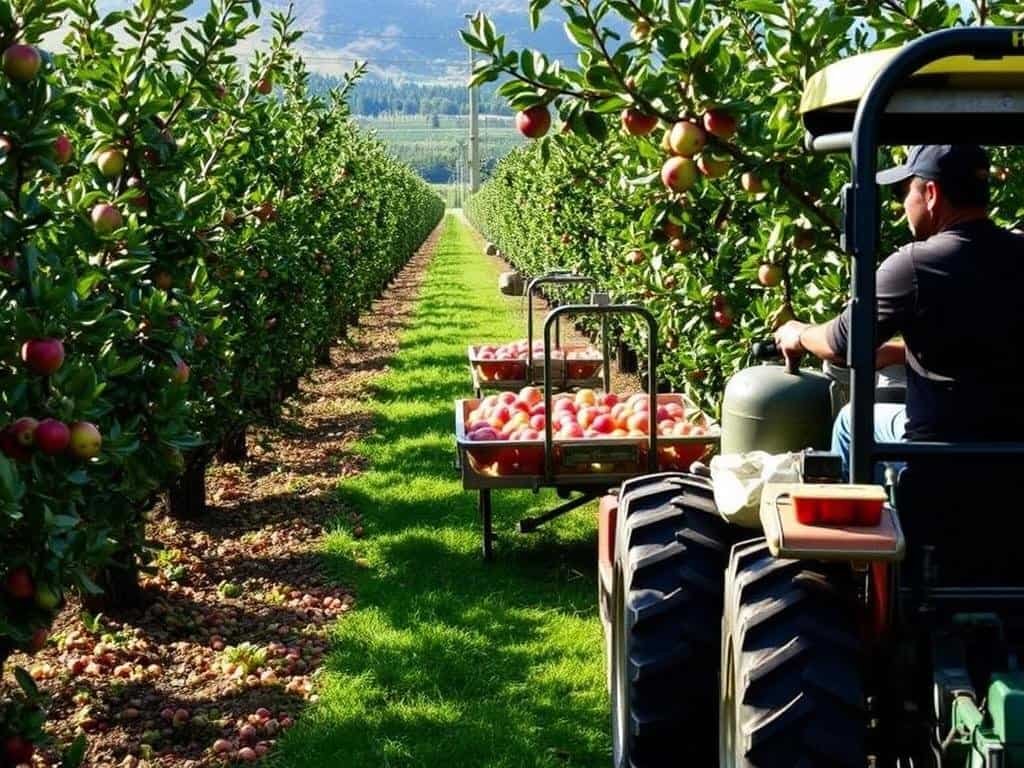
A 25-hectare apple orchard in Chile’s central valley region transitioned from using adapted standard tractors to specialized orchard models. The operation invested in two New Holland Frutteto tractors at a total premium of $40,000 USD above comparable standard models.
| ROI Factor | Annual Impact | 5-Year Impact | Notes |
| Reduced Crop Damage | $12,500 | $62,500 | 5% yield increase from less tree/fruit damage |
| Fuel Savings | $3,200 | $16,000 | 15% reduction in fuel consumption |
| Labor Efficiency | $8,500 | $42,500 | Reduced hours for same operational tasks |
| Maintenance Savings | $2,800 | $14,000 | Fewer repairs from orchard damage |
| Total Benefit | $27,000 | $135,000 | ROI achieved in under 2 years |
Calculate Your Potential ROI
Our equipment specialists can help you analyze the potential return on investment for your specific South American fruit operation.
Success Stories: Orchard Tractor Implementations in South America

Brazilian Citrus Operation
A 500-hectare citrus operation in São Paulo state implemented a fleet of specialized John Deere 5GF tractors with enhanced cooling systems designed for tropical conditions. The operation reported a 22% reduction in downtime during the critical harvest season and a 15% increase in operational efficiency.
Key to their success was selecting models with tropical-specific features including enhanced air filtration, sealed electrical components, and high-capacity cooling systems. The operation’s maintenance program was adapted to include daily air filter inspections and weekly cooling system cleaning.

Chilean Wine Grape Vineyard
A premium wine producer in Chile’s Colchagua Valley invested in SAME Frutteto S/V tractors specifically for their ability to navigate the region’s steep terrain. The specialized suspension system and terrain adaptability allowed the operation to mechanize previously manual processes on slopes up to 30%.
The operation reported labor cost reductions of 35% for hillside management tasks and improved worker safety. Their implementation strategy focused on comprehensive operator training and developing terrain-specific operating procedures for maximum efficiency and equipment longevity.

Peruvian Avocado Cooperative
A cooperative of small-scale avocado producers in Peru pooled resources to acquire three CASE IH Farmall 120N tractors with specialized implements. The narrow-profile tractors allowed members to navigate their densely planted orchards without damaging valuable trees or reducing yields.
The cooperative implemented a shared maintenance program with weekly service checks and a centralized parts inventory. Their collaborative approach allowed small producers to access technology previously only available to large operations, resulting in quality improvements that opened export market opportunities.

Learn From Successful Implementations
Connect with our network of South American fruit growers who have successfully implemented specialized orchard tractor solutions.
Future Trends in Orchard Tractor Technology for South America

The orchard tractor market for South America continues to evolve with innovations specifically addressing regional challenges. Understanding emerging technologies helps forward-thinking operations prepare for future advancements.
Electrification and Hybrid Systems
Major manufacturers are developing electric and hybrid orchard tractors that offer significant advantages for South American operations. These systems provide near-silent operation, reducing worker fatigue and enabling extended operating hours in noise-sensitive areas near residential zones.
Reduced emissions benefit both workers and sensitive orchard environments, while lower vibration levels improve precision for delicate operations. Early trials in Brazilian orchards show 40-60% reductions in energy costs compared to diesel-only models.

Precision Agriculture Integration
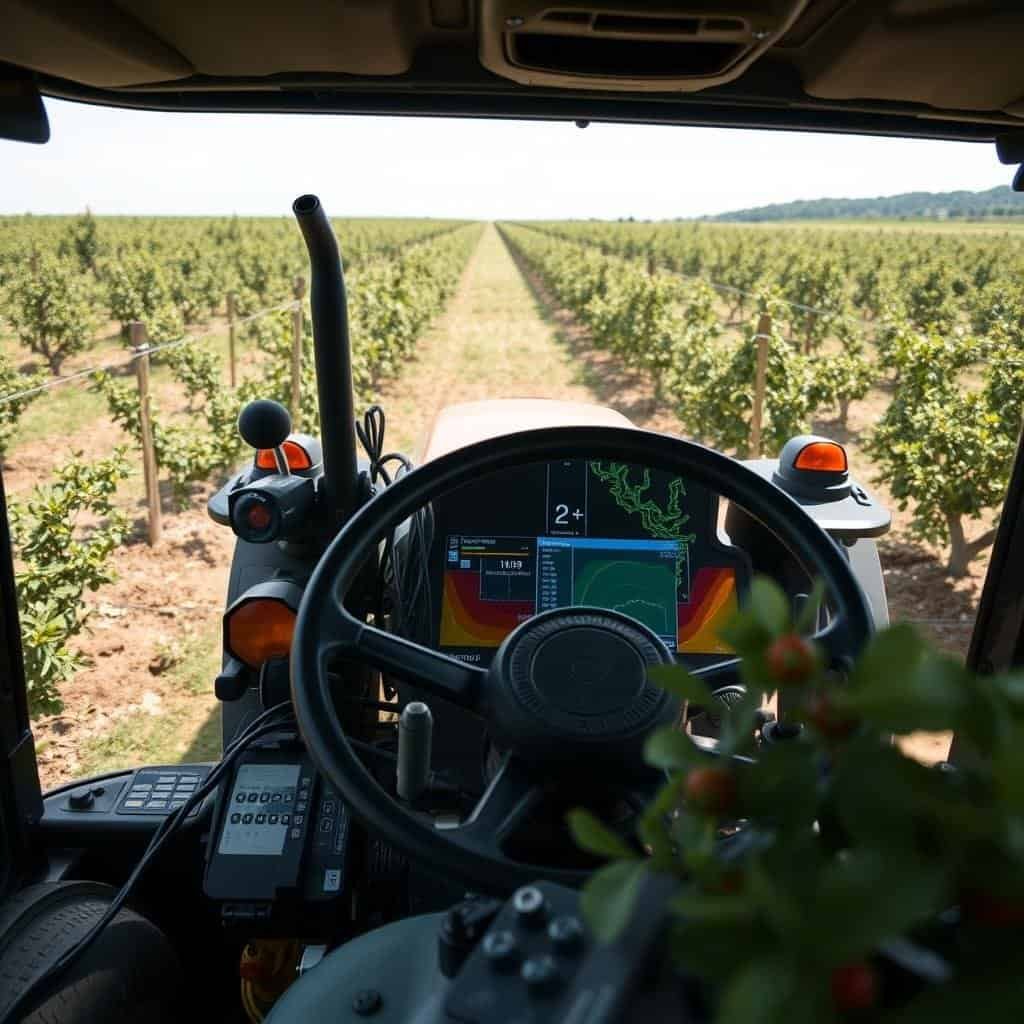
Next-generation orchard tractors feature enhanced integration with precision agriculture systems specifically calibrated for perennial crops. Tree-specific sensors monitor individual plant health and productivity, enabling variable-rate applications of inputs based on actual tree needs.
Advanced GPS systems with centimeter-level accuracy enable consistent operation in dense canopy environments where traditional GPS signals struggle. These systems are particularly valuable in premium fruit operations in Chile and Argentina focused on optimizing quality and resource efficiency.
Autonomous Capabilities
Semi-autonomous and fully autonomous orchard tractors are being developed to address labor challenges facing South American fruit producers. These systems can perform repetitive tasks like mowing, spraying, and some cultivation operations with minimal human supervision.
Advanced obstacle detection systems specifically designed for orchard environments can identify and avoid trees, workers, and equipment. Early implementations in Argentinian orchards show labor efficiency improvements of 30-50% for routine maintenance tasks.

Stay Ahead of Industry Developments
Subscribe to our quarterly technology briefing focused specifically on orchard equipment innovations for South American fruit producers.
Making the Right Orchard Tractor Decision for Your South American Operation

Selecting the right orchard tractor solution for your South American fruit operation requires careful consideration of your specific regional conditions, operational requirements, and long-term objectives. The investment in specialized equipment delivers substantial returns when properly matched to your unique farming environment.
Whether you operate a small family orchard in Peru, a mid-sized apple operation in Chile, or a large commercial citrus enterprise in Brazil, specialized orchard tractors offer significant advantages in productivity, efficiency, and crop protection. By understanding the key features, maintenance requirements, and implementation strategies discussed in this guide, you can make informed decisions that position your operation for long-term success.
Ready to Find Your Ideal Orchard Tractor Solution?
Connect with our South American agricultural equipment specialists for a personalized consultation tailored to your specific fruit farming operation.